
Your identity throughout the process
A private label brings a useful product together with the identity of the business selling it. For retailers, wholesalers and distributors, customization includes the product itself, units per pack and presentation to the consumer. Winpac supports business customers from the first concept and specification through to manufacturing and import coordination. The work begins by defining the audience, sales channel and intended use. This provides a basis for developing a specification and packaging that work together, with design choices considered alongside factory requirements and the supply program.
Graphics as part of development
The graphics department forms part of product development. It plans packaging and carton design with the customer and in coordination with the supplier, connecting brand identity with the physical format. The work considers information placement, graphics, print colors and pack structure. A consistent visual language needs to work across an assortment and when the consumer examines an individual item on the shelf. The aim is packaging that represents the brand clearly, presents the product appropriately and suits the technical possibilities of manufacturing and packing.
A complete specification for a simple napkin
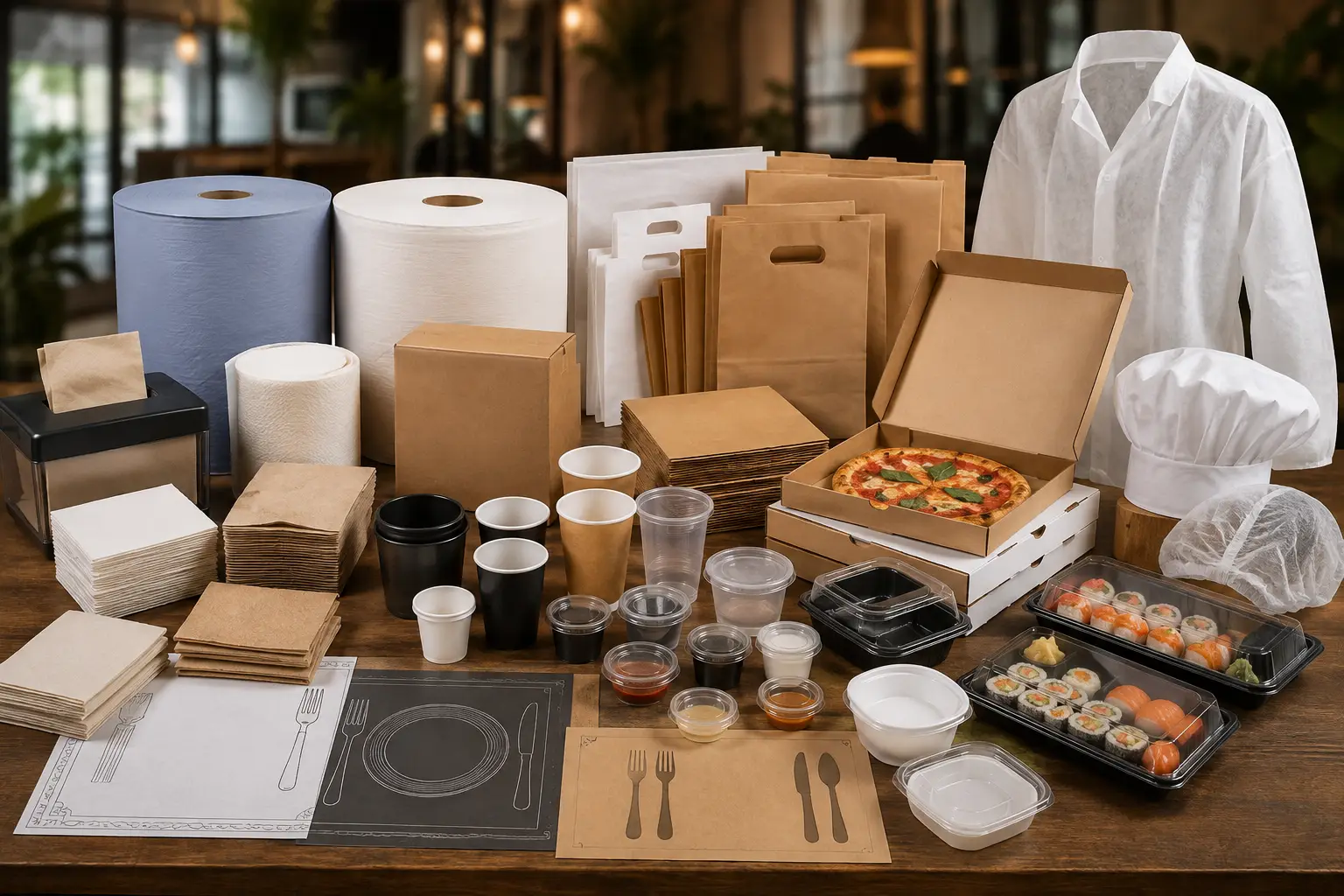
An everyday napkin illustrates the importance of specification. Its definition includes material composition, production method, dimensions, basis weight in grams per square meter (GSM), ply count and folding style. Alongside these details, teams define units per pack, packaging material and the arrangement in the outer carton. These choices are connected: changing a dimension or fold can affect pack size, presentation and loading arrangements. Graphics and development therefore rely on a clear specification, with the design considered alongside the structure of the product and its packaging.
When the fold changes the pack
Folding also affects how a pack is arranged. When a fold creates greater thickness on one side of a napkin, stacking every unit in the same direction can produce an uneven shape. Depending on the sample and specification, alternating orientations in a head-to-tail arrangement can be considered to balance the volume. The decision affects appearance, packing convenience and carton arrangement. Print colors, finishes and packaging materials are assessed alongside it. Design decisions therefore connect with manufacturing, unit quantities and shipment planning, and need to be reviewed as part of one process.
Design connected with manufacturing
Connecting design, specification and manufacturing helps create a product that carries the customer’s identity and suits its intended use. Product and packaging details are coordinated among the customer, Winpac teams and the factory. Quality control and import planning continue that process, using the approved product and planned packaging as the basis for supply. This also provides a way to consider new ideas within familiar categories: a change in format, fold or pack can address a commercial need. The private-label page explains the stages and capabilities that connect the customer’s idea with the finished product.
Material, dimensions and use
Graphics, format and printing
Quantity, folding and arrangement
Loading and shipment planning
EXPLORE THE NEXT STEP